
Special Jurisdiction for Peace continues to produce important Legal Opinions despite massive cutbacks announced by the Abelardo De La Espriella Government
Colombia’s transitional justice system was established as part of a peace deal between the government and the Revolutionary Armed Forces of Colombia (FARC), which at that time was the largest rebel group. The Transitional Justice System in Colombia – known as the Special Jurisdiction for Peace (JEP) handles the prosecution and investigation of atrocious crimes and crimes against humanity committed during the conflict.
Recently there has been growing criticism from those right-wing political parties which have levelled a variety of accusations such as that there are fewer convictions of the FARC compared to the State Security Forces, that it’s too costly, etc. One of these critics is the current president of Colombia Abelardo De La Espriella who has severely criticised the work of the JEP and suggested that their investigations are biased against military members. In an interview he accused JEP of “persecuting the heroes of the homeland” while “washing the hands of the guerrillas who committed crimes against humanity“. Ana Maria Rodriguez, Director of the Colombian Commission of Jurists, who represents victims of Colombia’s conflict, describes these biased accusations as “patently false”.
Transitional Justice is an obligation that was agreed to by the Colombian State as part of the Peace Accord, as such it is embedded in the Colombian Constitution, it is not a policy of an individual government. The JEP above all has an obligation to the over 9, 659, 204 victims of the conflict.
Colombia is currently experiencing a time of fiscal austerity and as a result the questions raised about the cost of the JEP have resulted in the Government announcing a massive 181 billion Colombian pesos (U$57m) cut for the 2027 fiscal year. As a result, the JEP will have to cut its staff including approximately 85% of the 1,200 external contractors which include psychologists, administrative staff, technical experts etc. The JEP will also as a cost cutting exercise change offices to a smaller building next year. Many of the victims fear that budget cuts could decimate the capacity of the JEP.
Many are questioning whether Colombia’s fiscal situation is the real reason for the cut in the JEP budget, particularly as De la Espriella Colombia’s annual budget spend has increased overall to U$200bn for 2027.
In addition to budget cuts, the JEP faces another major challenge. Colombia’s right-wing parties in Congress want to bring the work of the JEP to a premature end. The JEP entered into operation with a 10 year lifespan, enshrined in law with the option of extending this for a further five years; and beyond if essential, “10 years from the effective date on which all of the JEP’s chambers and divisions begin operations, followed by an additional 5-year period to conclude its judicial activities; this latter period may, if necessary, be extended by law to allow the JEP to conclude its activities, at the request of the JEP’s magistrates” (unofficial translation).
There is a very concerning Bill tabled by Senator Enrique Gómez (Government Party – National Salvation). The Bill (Legislative Act Project 018 of 2026) seeks to advance a reform of Acto Legislativo 01 de 2017 and terminate the functioning of the JEP prematurely by March 2028, ten years after it commenced with no possibility of an extension. The Bill also proposes that following termination of the JEP, it’s functions should then transfer to the ordinary court system. However, fortunately the Bill did not get a sufficient quorum at its second reading. The reading was boycotted, not only by the Pacto Historico but also by members of other parties as well. Senator Enrique Gómez said he would re-introduce the bill in the next session in 2027.
As Acto Legislativo 01 of 2017 is a constitutional law, amending it requires eight readings: four in each House. If the proposed amendment passes, it will have devastating consequences for the JEP’s work. It will also send a deeply negative message to victims about the value placed on their contributions—made at considerable personal cost—and deal a blow to other peace processes internationally.
The JEP is at a critical stage in its work. It has recognised over 340,000 victims and brought before it over 13,400 participants, including former FARC-EP combatants, members of the security forces and civilian third parties. According to the United Nations, this is the largest restorative justice effort in the world. These participants have revealed the truth and in many cases, accepted direct responsibility for the crimes they committed in the context of the armed conflict. The JEP now needs resources to move into the final stages of its work.
The JEP is an impartial and restorative justice model that has already started to yield tangible results. It represents the best guarantee of non-repetition for the victims, as well as the possibility of closure, something that it would have been impossible to achieve through the ordinary justice system given the nature of the crimes committed in the context of an internal conflict.
The Special Jurisdiction for Peace (JEP) is reaching a turning point that will determine its fate. It is important that the JEP is not brought to a premature end, but rather that it is allowed to extend its mandate as envisaged under the current legislation – if needed. If it is forced to end prematurely, it will leave behind the broken trust of the victims and unfulfilled expectations. It will also have repercussions internationally as many countries and multilateral bodies have supported the work of the JEP financially, technically and politically.
Whilst the JEP’s progress has been slow, the initial stages of gathering evidence and identifying patterns and systematic practices take time. The JEP now has the information it needs. Given sufficient time, it has the potential to deliver results and ensure that these crimes do not go unpunished. This process, together with seeking forgiveness and implementing sanctions and reparations, is the most effective way to prevent such crimes from recurring.
At least 20 members of the Colombian Congress have appealed to the International Criminal Court (ICC) for support in opposing planned budget cuts to the Special Jurisdiction for Peace (JEP), warning that the reductions could undermine investigations, trials and sentencing for war crimes.
Most importantly for the 9,659,204 victims is that the truth is told and forgiveness requested for the atrocities committed, along with appropriate sanctions and reparations
Recommendations
- The Special Jurisdiction for Peace should be allowed to, if necessary, extend its operations beyond the first 10 years, as envisaged in the current legislation;
- Countries and multilateral bodies that have invested in the Special Jurisdiction for Peace should continue their political and financial support, while advocating for the institution to be granted the time and independence necessary to complete its mandate effectively and within an appropriate time frame;
- Ensure that the Special Jurisdiction for Peace is provided with sufficient financial, technical, and institutional resources to complete its mandate effectively, and that the implementation of sanctions and the delivery of comprehensive reparations to victims are fully supported and carried out in a timely manner.
Some information on current JEP cases
Macro-Case 08
The Truth Recognition Chamber of the Special Jurisdiction for Peace (JEP) charged nine former members of the National Navy and two of the National Police with war crimes and crimes against humanity as those ultimately responsible for 32 massacres and other criminal acts committed between 1999 and 2001 against the civilian population of Montes de María and the Canal del Dique. The 32 massacres include those in El Salado, Macayepo and Chenque between 2000 and 2001.
The investigation examined more than 18,000 georeferenced and cartographic records, enabling the Chamber to identify a systematic pattern of violence marked by strategic collaboration between paramilitary groups, certain members of the security forces, and other actors operating across the region.
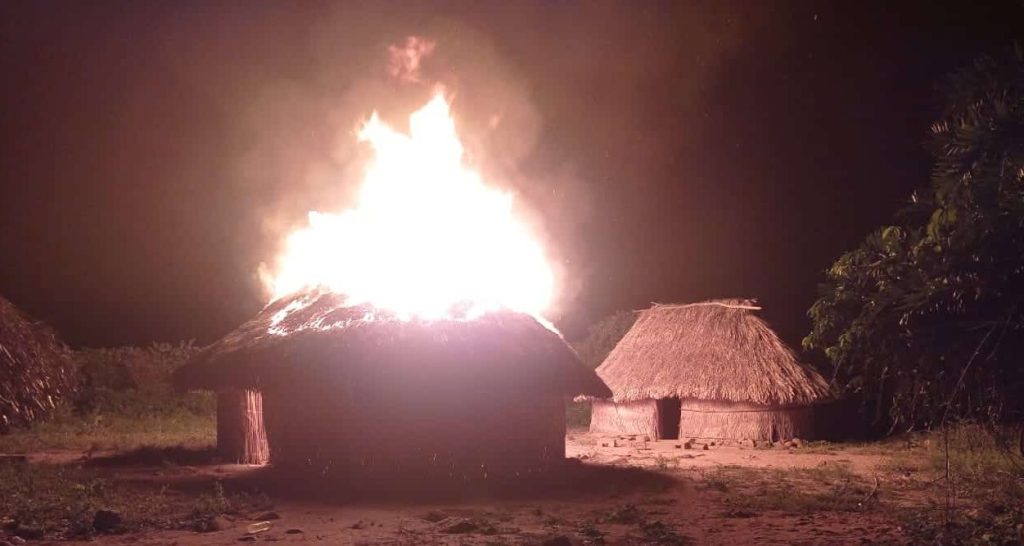
The massacres of El Salado, Macayepo, and Chengue, which took place in February 2000, resulted in the deaths of an estimated 100 people, according to the Office of the Attorney General. The atrocities were carried out as part of a joint operation involving paramilitary groups and members of the security forces. Civilians in these communities were subjected to extreme acts of violence, including dismemberment and torture with chainsaws, screwdrivers, stones, and pieces of wood. Women were subjected to sexual violence, young people were hanged, and elderly people and pregnant women were brutally beaten. The massacres also led to the forced displacement of approximately 3,500 people and numerous cases of enforced disappearance.
The case highlights patterns of stigmatization and persecution directed against peasant communities, their leaders, and their families. It further identifies sexual and gender-based violence as an integral component of the criminal conduct, including persecution specifically based on gender.
El Salado
In El Salado, between 16 and 20 February 2000, units of the United Self-Defence Forces of Colombia (AUC) carried out coordinated attacks on the communities of El Salado, Flor del Monte, Canutal, Canutalito and La Sierra. The incursion resulted in the deaths of at least 60 people and the sexual violence of 15 victims, in addition to numerous cases of enforced disappearance, torture and mass displacement. More than two decades later, the consequences of these events continue to affect the communities concerned.
According to the ruling, the attacks were motivated by the stigmatisation of members of these rural communities as alleged collaborators of the former FARC-EP. Despite having a presence in the area, prior intelligence and the operational capacity to intervene, state security forces failed to respond.
In the Court’s view, this inaction was not accidental rather it formed part of a broader pattern of collaboration between paramilitary groups and state agents. This alliance between paramilitary structures and law enforcement operated through deliberate omissions and the facilitation of criminal acts, with the aim of sowing terror and depopulating the territory through forced displacement. Seven Navy officers from the 1st Marine Infantry Brigade, the 5th Rifle Battalion and the 33rd Counterguerrilla Battalion were charged in connection with these events. Rodrigo Alfonso Quiñones Cárdenas, commander of the First Marine Infantry Brigade, was charged with functional complicity; the other officers were charged with omission. The 11 respondents were called upon to acknowledge responsibility belonged to the Navy and Police units operating in Bolívar and Sucre. The decision also recognises the distinct impacts of the violence on women, children and adolescents, ethnic groups communities and LGBTQ+ individuals.
If the respondents acknowledge responsibility, the Peace Tribunal will impose restorative sanctions. If they do not, their cases may be referred to the Investigation and Prosecution Unit for adversarial proceedings. If responsibility is established through those proceedings, prison sentences of up to 20 years could be imposed.
The ruling sets out a range of reparative measures, including efforts to locate and identify missing persons and the formal recognition of the Mujeres Buscadoras (women searchers). It also mandates the establishment of a technical committee to help ensure the provision of appropriate care and support for women who have survived sexual violence.
Macro-Case 07
The JEP charged nine former members of the now-defunct FARC-EP as those ultimately responsible for war crimes committed against recruited children.
The Truth Recognition Chamber identified two patterns of violence committed against children whilst they were in the ranks of the now-defunct guerrilla group, including ill-treatment, torture, sentences, executions and trials without due process, as well as reproductive violence against recruited girls.
During the announcement of the decision, which took place on 4 November 2026, Judge Lily Rueda Guzmán provided details of the documented forms of punishment used by the now-defunct guerrilla group against the victims.
- A more detailed account of Macro-Case 07 can be found by clicking this link
- For an account of Macro-Case 01 see here
- For an account of Macro-Case 03 see here